


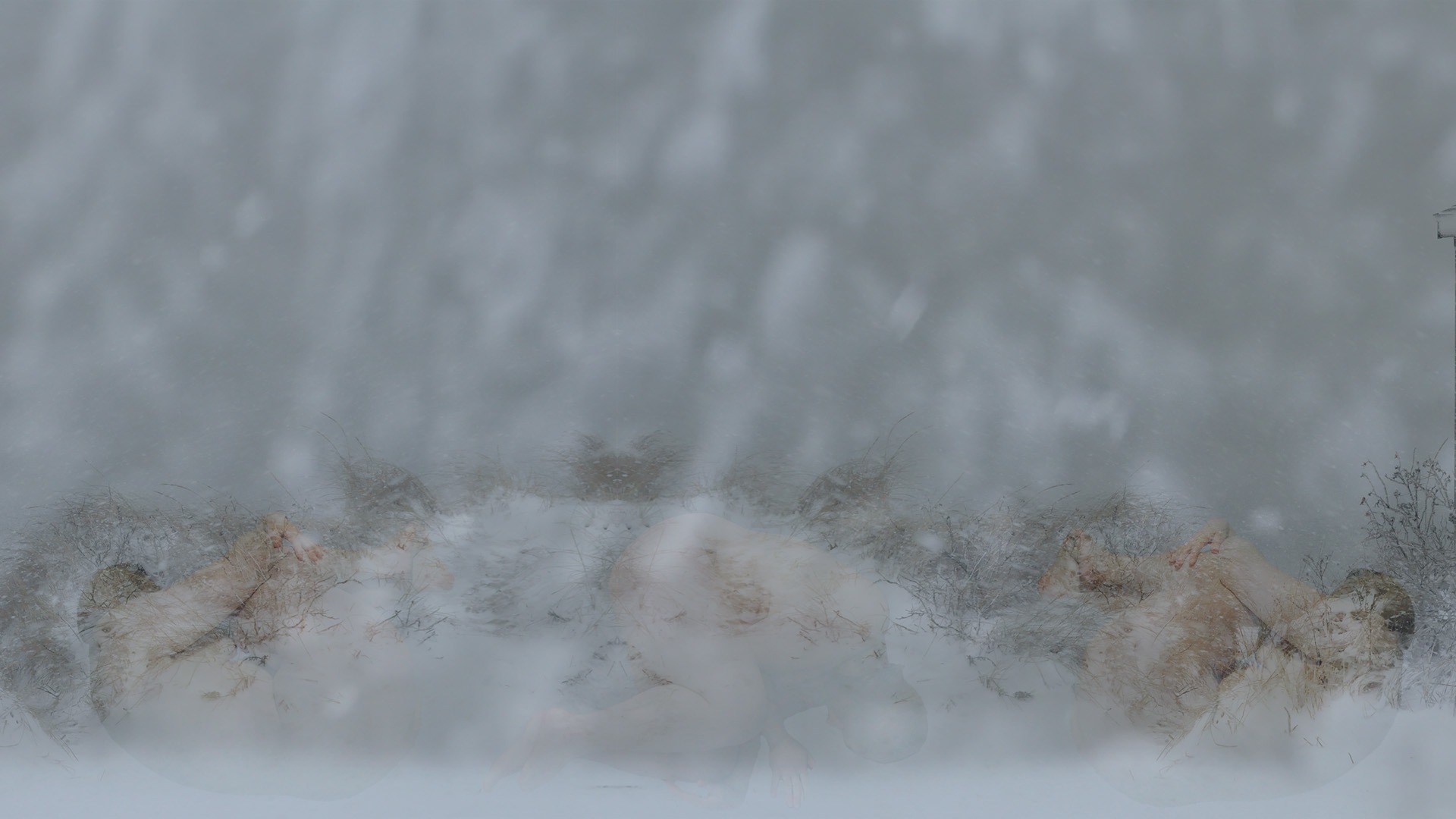
We Are Imagoglossia
or what can replace an absent object?
Туга́ pronounced approximately tuhá, as the Ukrainian “г” sounds like a soft, voiced “h” — expresses a blend of longing, sorrow, grief, and yearning for something absent.
No one arrives anywhere alone. Wherever you happen to set down your suitcase and rest, a strange feeling of irreparable loss, an overwhelming absence, will surface. You will search your pockets, look for the right words to name what you feel, but you will not find them. Seeking comfort, you will open photo albums, recognise objects and people, but none of it will bring relief.
That is what tuhá (туга) is like. It burns, freezes, falls silent, runs, crosses itself, mocks, prays, curses. It is merciless and holy. It is the juxtaposition of your own experiences with those of others, whose lives have settled in layers upon yours. Why else would you long for a pier on a river in a town you have never visited? Or weep for that adobe house, with its dry well between the plum tree and the apple tree, its walls peeling, consumed by flames in the middle of a winter night in a village where no one lived anymore? A house brought into being through someone’s telling, forever burning in the continuous present. Yet the voice of the one who told its story became part of your tuhá: an active past, a past that also exists in the continuous present.
When I left, I travelled one last time through the rusting city, plunged into a coma induced by unemployment, then across the frozen, inhospitable steppe. I entered a church and lit a candle. It was the warmest and brightest thing I had held in my hands for a long time. I swore I would not miss it all, though more than an oath, it was a plea.
Tuhá is merciless. I told you so.
Experience the Installation
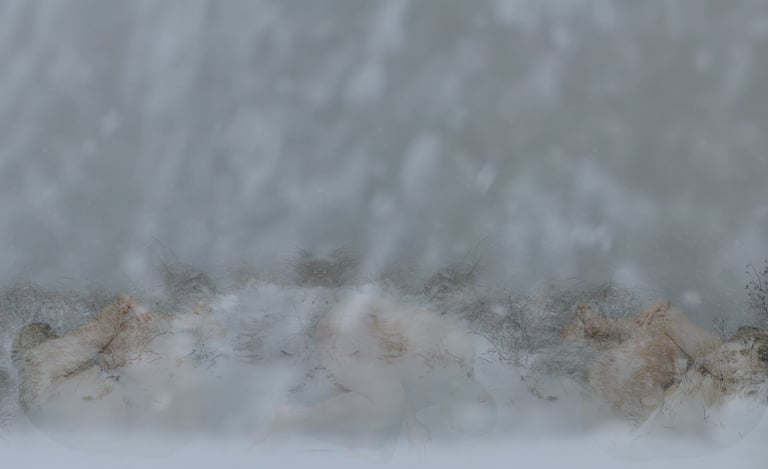
Video art projected onto the wall (looped playback):
https://youtu.be/N3bVKzxNM8Y
Sound from the box, heard through headphones (looped playback):
https://youtu.be/39HwsC_Rq8Y
Visual documentation of the box's interior (without sound):
https://youtu.be/cnrq491rtTk
Installation documentation (video projection and sound box):
https://youtube.com/shorts/TQ6OYoIQ_hs
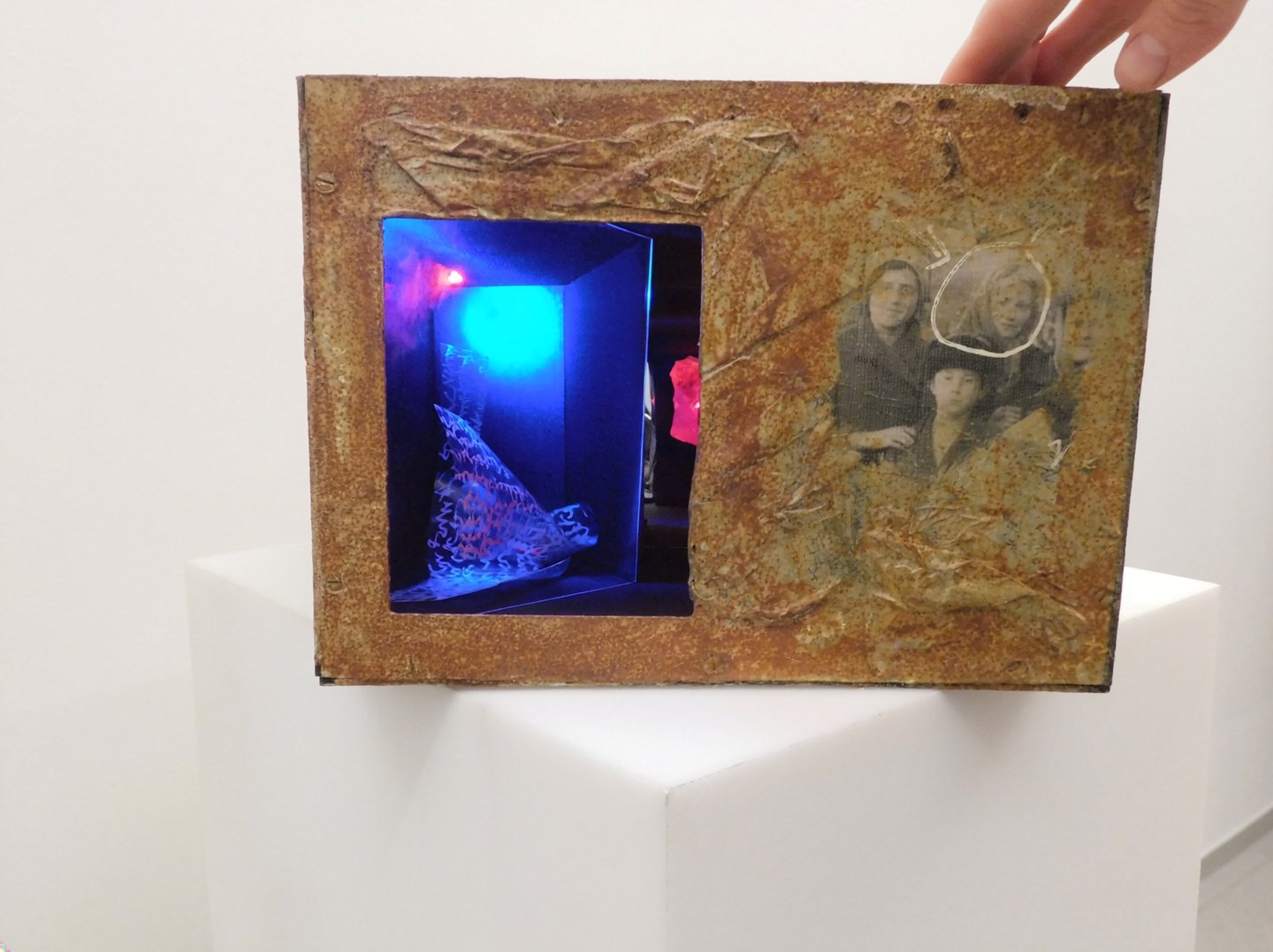
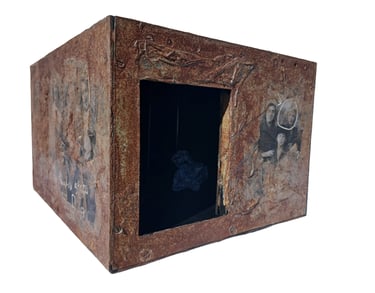
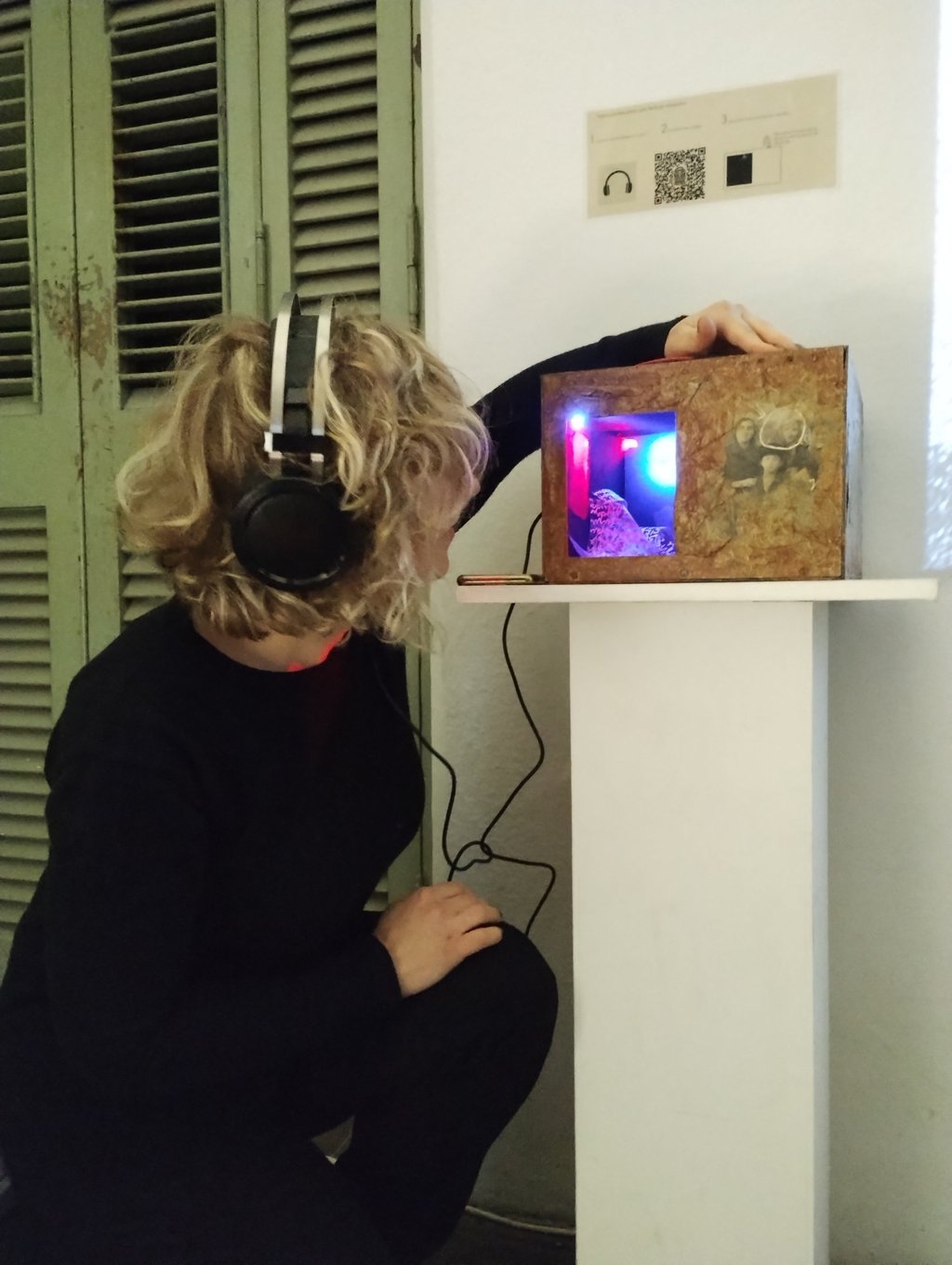
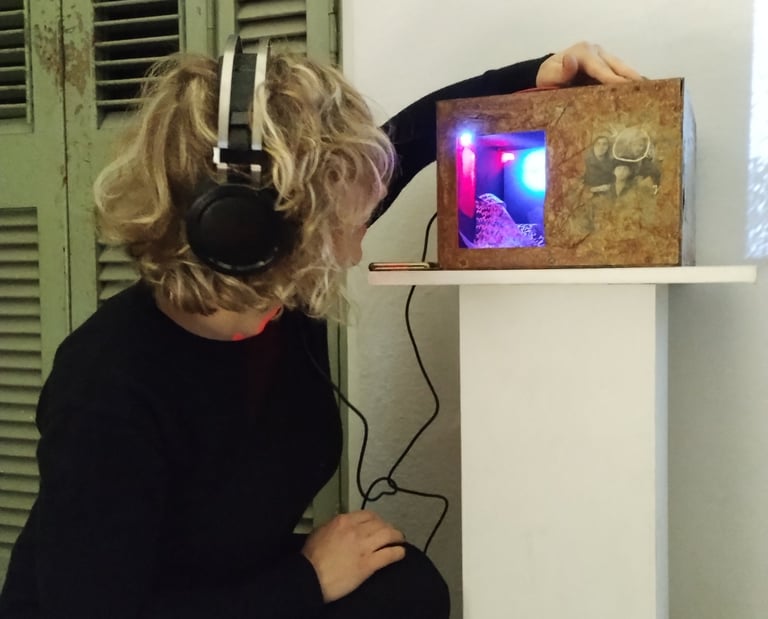
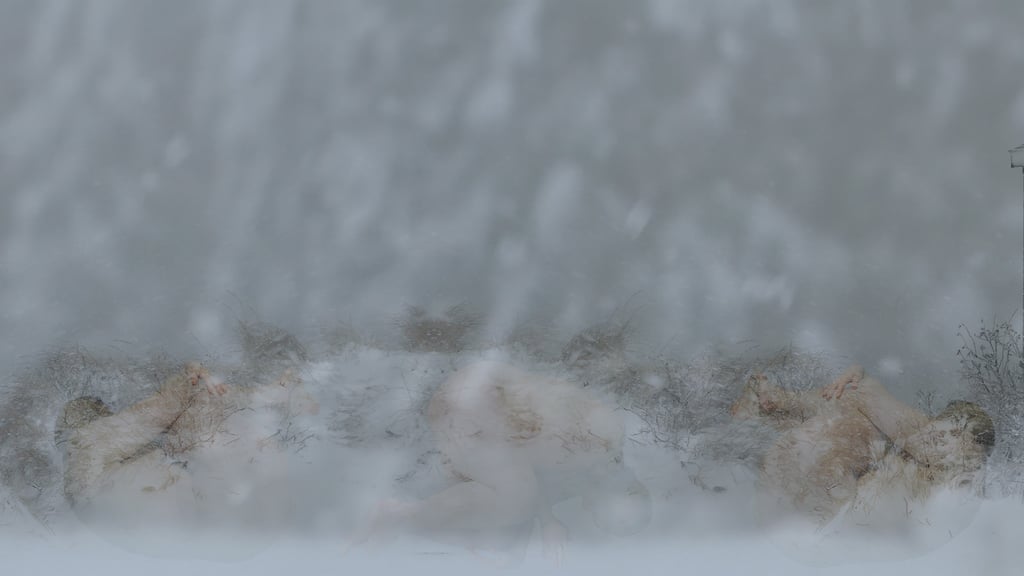
The audiovisual installation explores the feeling of toská. The video projection on a wall represents the mental processes involved in searching for a word to name an unrecognisable emotion. Beside it, in semi-darkness, stands a sound box — a device representing introspection — which visitors experience individually by activating two lights and listening through headphones.
The box's two compartments represent the present and the power of collective memory, which precedes the individual and plays a constitutive role in shaping who they are.


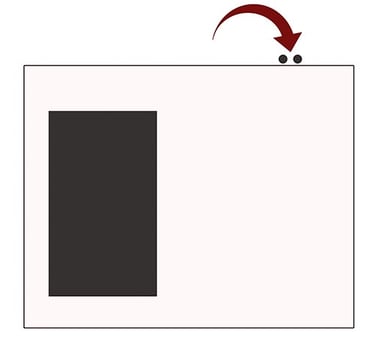
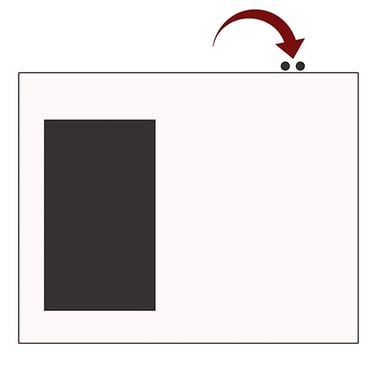
1. Approach the installation
2. Put on the headphones placed beside the box
3. Activate the lights during the audiovisual experience
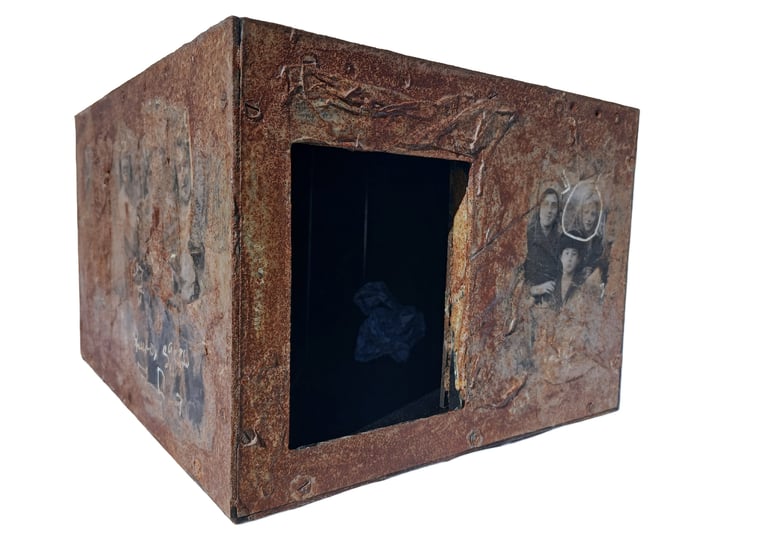
The box-like device was constructed using the Pepper’s Ghost technique, a 19th-century optical illusion.
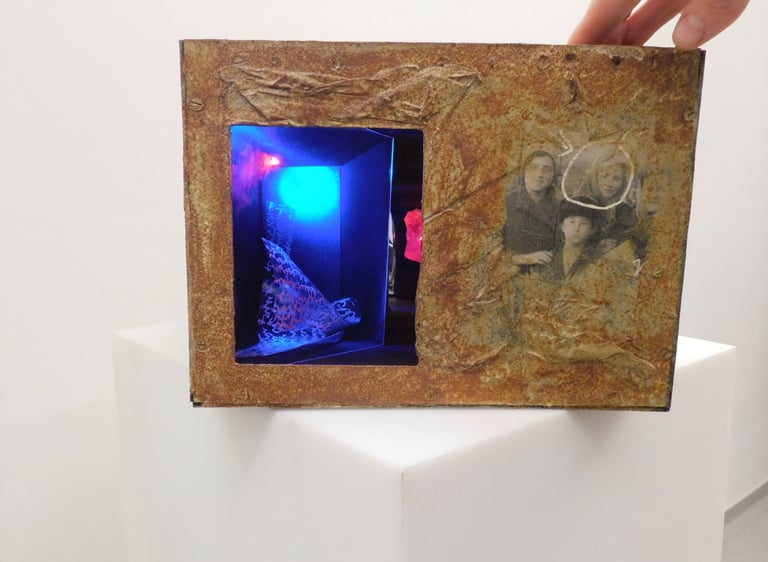
Materiality | The box contains two compartments, at once separate and interconnected, each defined by a particular quality of light: a warm tone represents the force of collective memory, which precedes the individual and constitutes them as a subject; a cool tone represents the body in the present, embodied in a flexible, translucent material that evokes Zygmunt Bauman’s concept of liquid modernity.
In the warm-lit compartment, alongside an image reflected in a mirror, lies a crumpled letter. It might be a letter sent but never received, or one imagined but never written.
The mirror reflects an image that is, in turn, reflected into the adjacent compartment, where a piece of plastic bearing handwritten text lies beneath a cool light. The dialogue between the two compartments takes place through the activation of two lights installed on the lid of the box. If one of the internal lights is switched off, the illuminated space remains silent, awaiting a sensory exchange.
Sound | The soundscape, specially designed to accompany the box, is experienced through headphones placed beside it. Audio plays continuously through a device concealed behind the box and connected to a power outlet.
The Audience | Proximity is essential: visitors are invited to look inside the box individually. The semi-darkness required for the installation recreates a moment of intimacy and introspection.
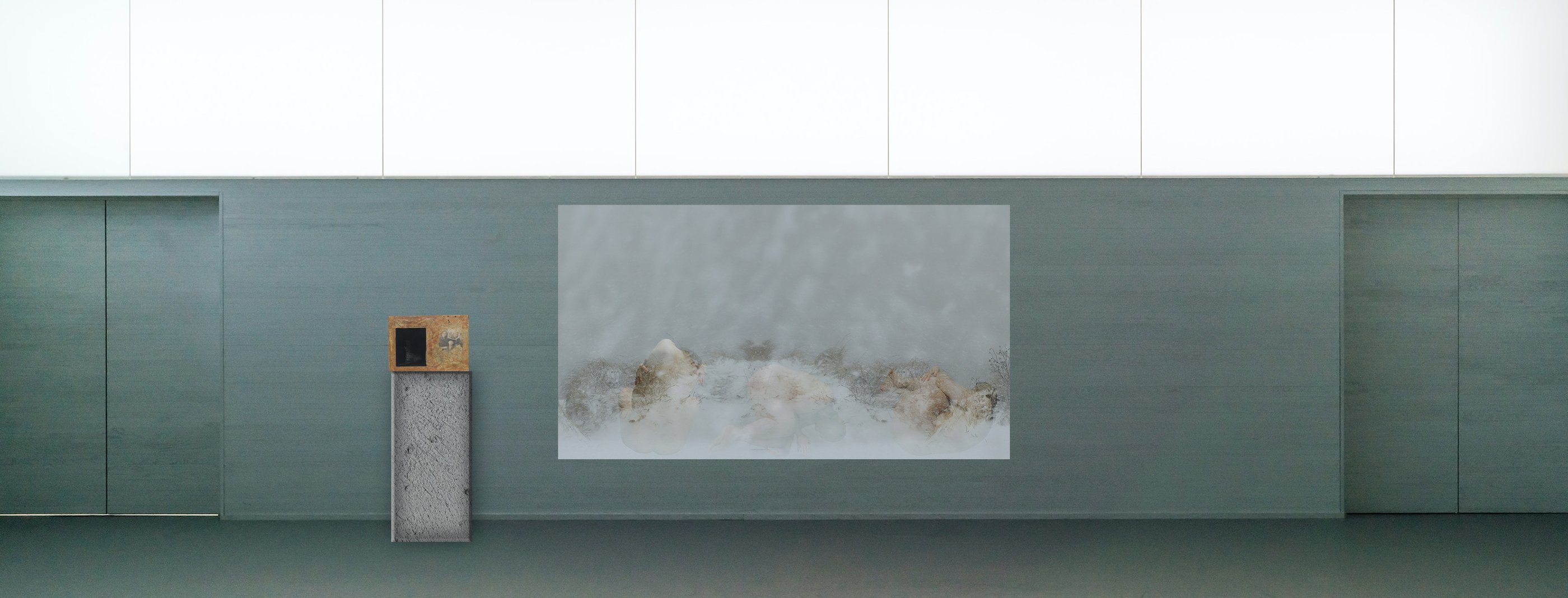
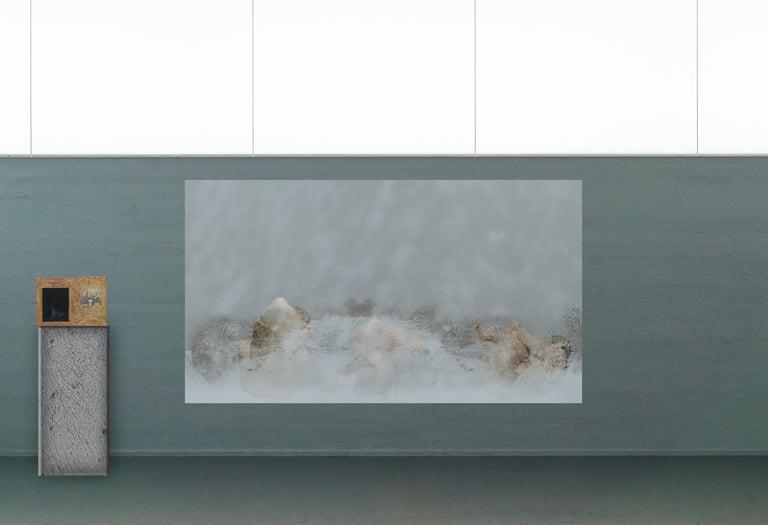
The installation space should be dimly lit, in semi-darkness. The sound box should be placed on a stand approximately 110 cm high, against the wall, beside the video projection.
Stand for the sound box | Suggested dimensions
Height: 110 cm
Base: 50 × 60 cm
Sound box | Dimensions
Height: 18.5 cm
Width: 25 cm
Depth: 30 cm
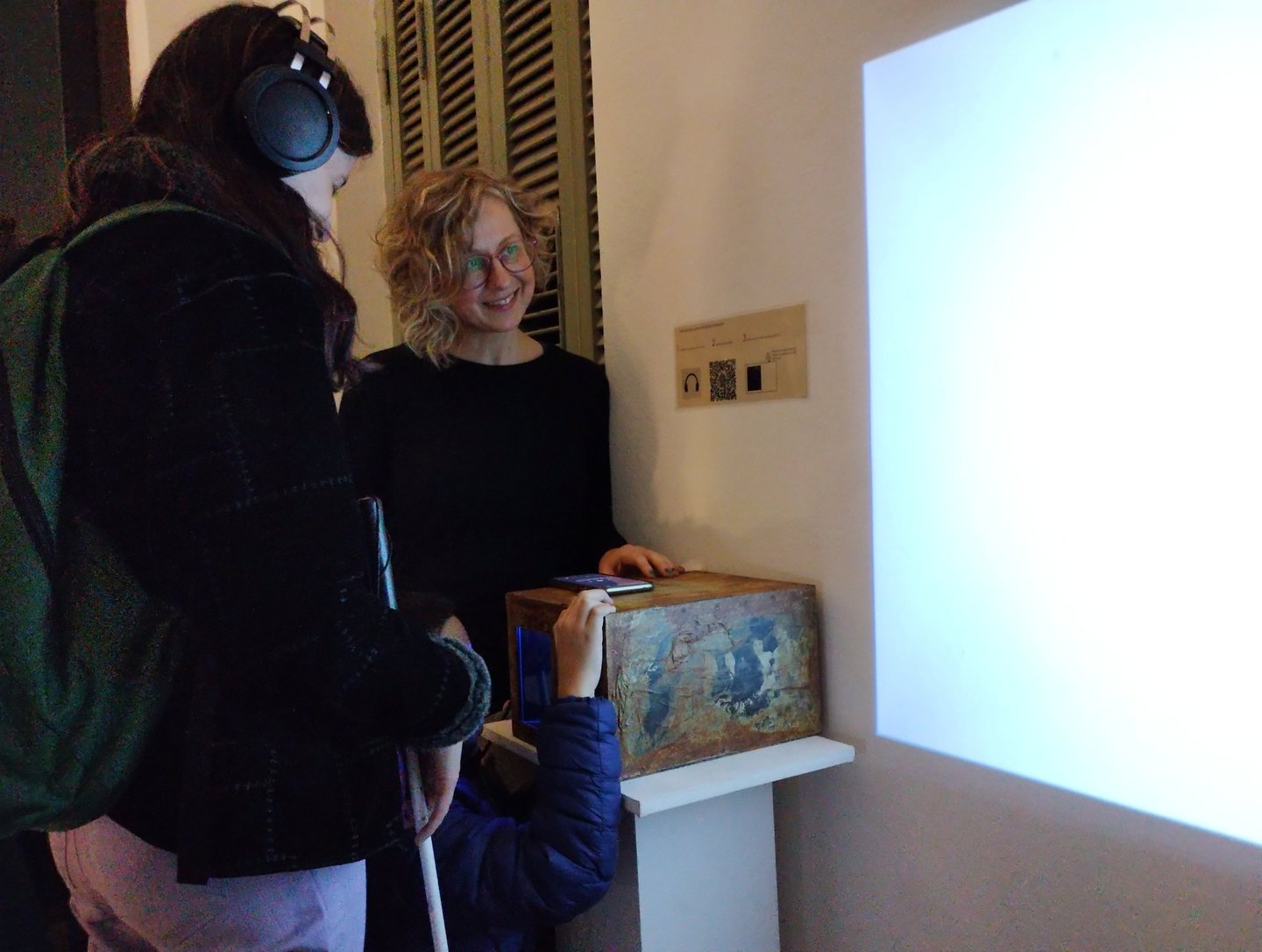
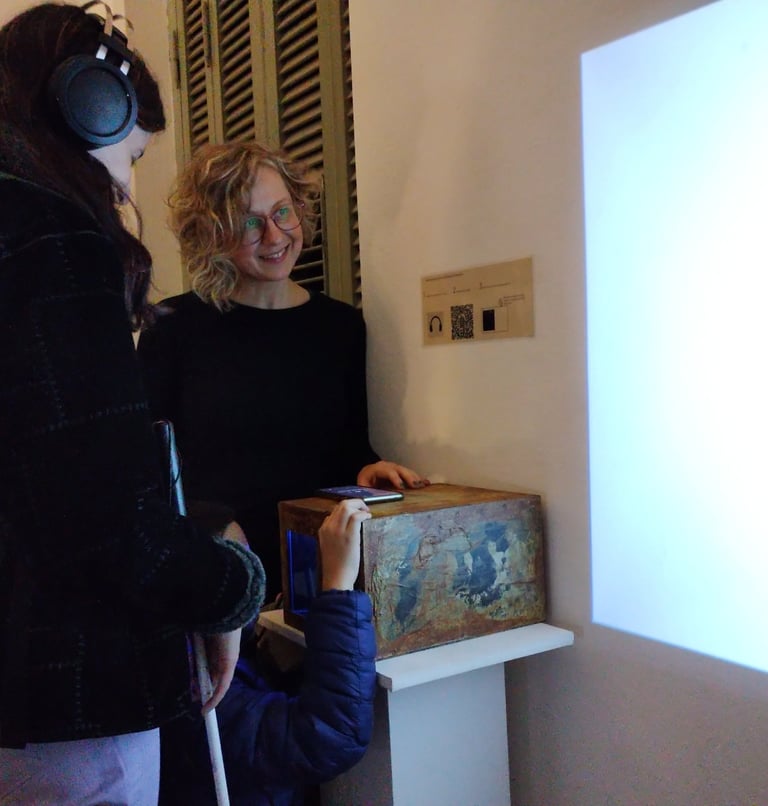
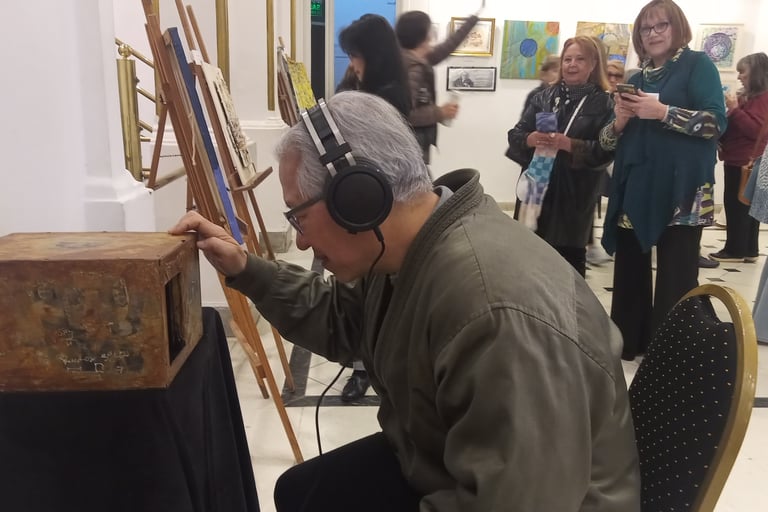
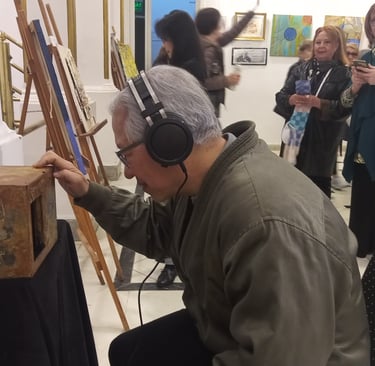
Umbral Gallery, April 2024 (left)
Cultural Centre of the Italian Mutual Aid Association of Belgrano, September 2024 (below)